Pre-Rendering vs SSR vs SSG: Which Should You Choose?
You built a beautiful single-page application. The animations are smooth, the UX is polished, and your website design feels modern. Then you check Google Search Console and realize your pages are barely indexed.
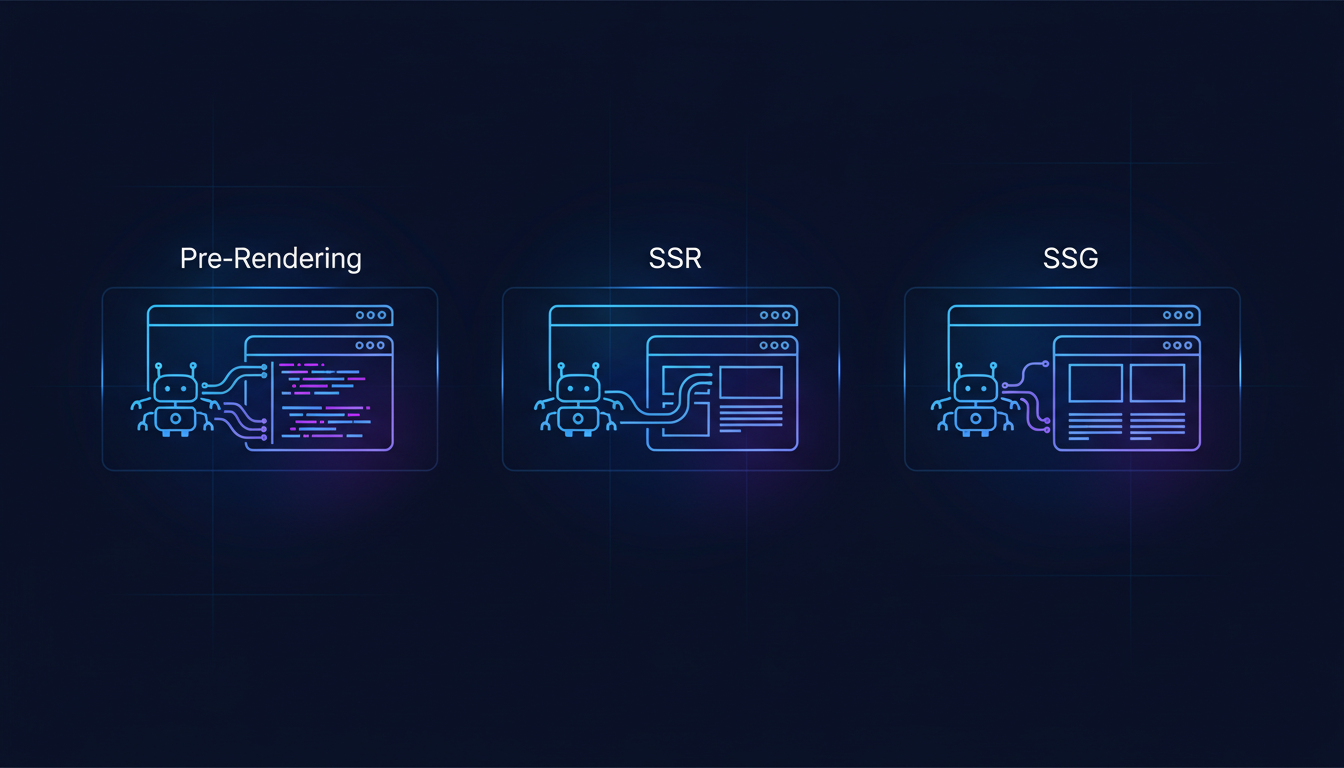
Sound familiar? This is the classic SPA SEO trap. The fix usually comes down to choosing between three rendering strategies: pre-rendering, server-side rendering (SSR), and static site generation (SSG). Each has real trade-offs, and picking the wrong one can cost you in performance, developer hours, or search rankings.
Why Rendering Strategy Matters for SPAs
Most SPAs built with React, Vue, or Angular render content entirely in the browser using JavaScript. Search engines and AI crawlers receive an almost-empty HTML shell — and many never bother executing the JavaScript to see what's inside.
Googlebot has improved its JavaScript rendering capabilities, but it still queues JS rendering separately from initial crawling. That delay can mean days — or weeks — before your content is indexed. Other crawlers, including those powering AI search tools, often skip JavaScript entirely.
Option 1: Pre-Rendering
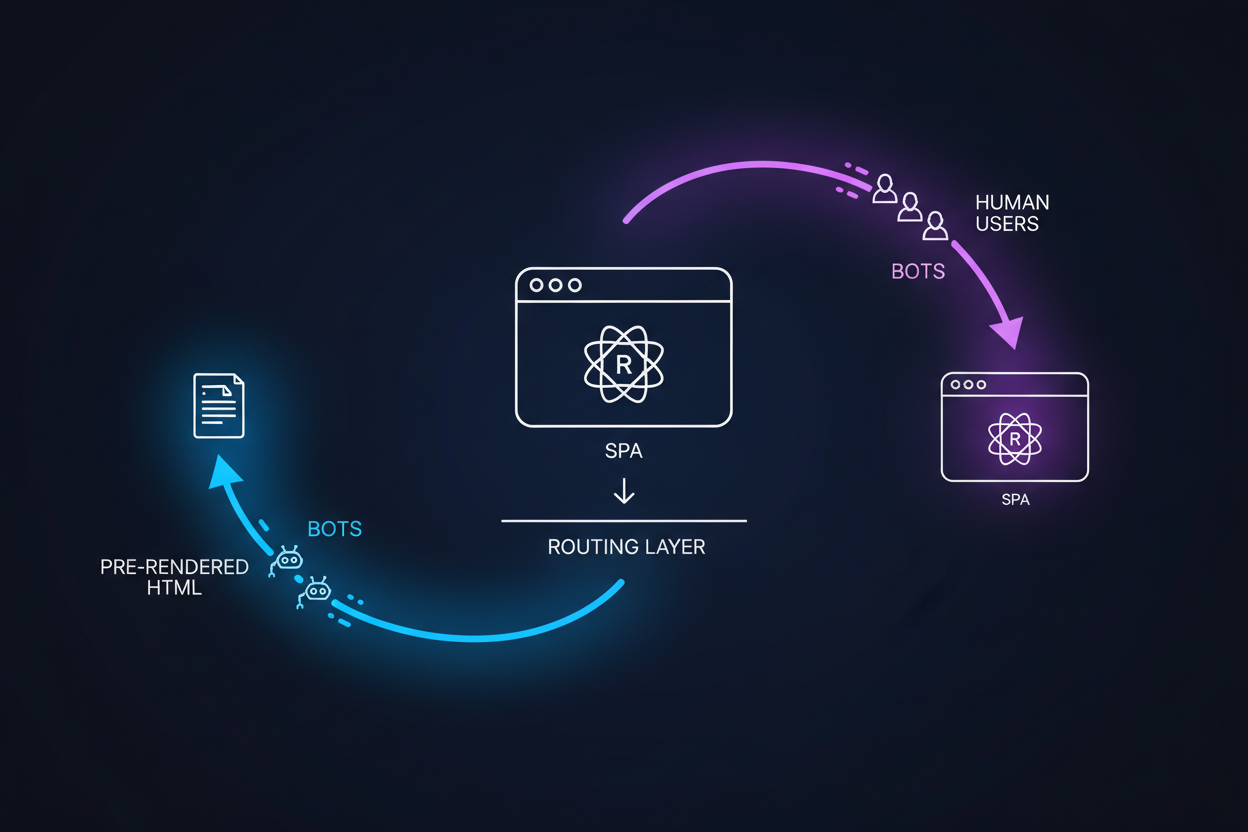
Pre-rendering intercepts requests from bots and serves them a fully rendered, static HTML snapshot of your page — while real users still get the fast, interactive SPA experience they expect.
It's the lightest-touch solution. You don't rewrite your stack, you don't manage a Node server, and you don't rebuild your website design from scratch. A service like RndrKit sits in front of your existing app, detects crawlers, and delivers clean HTML automatically.
Best for:
Existing SPAs that need SEO without a full rebuild
Teams using no-code builders like Lovable, Bolt, or Webflow
Projects where developer time and budget are limited
Sites with dynamic content that changes frequently
Option 2: Server-Side Rendering (SSR)
With SSR, your server generates a full HTML page on every request before sending it to the browser. Frameworks like Next.js and Nuxt make this relatively straightforward, and it delivers excellent SEO since crawlers always see complete content.
The downside? SSR adds server infrastructure complexity and cost. Every page load hits your server, which means you need to think about scaling, caching strategies, and latency. It's also a significant architectural shift if you're migrating an existing SPA.
Best for:
New projects being built from the ground up
E-commerce sites with real-time inventory or personalization
Teams with dedicated DevOps capacity and server infrastructure
Applications where authenticated, user-specific content must be SEO-visible
Option 3: Static Site Generation (SSG)
SSG pre-builds every page at deploy time, producing pure static HTML files served from a CDN. It's blazing fast, incredibly cheap to host, and search engines love it. Tools like Gatsby, Astro, and Next.js's static export mode make it accessible.
The catch: SSG struggles with dynamic or frequently updated content. If your site has thousands of pages that change daily — think news sites or large catalogs — rebuild times become painful. You also lose real-time data unless you layer in client-side fetching.
Best for:
Blogs, documentation sites, and marketing pages
Sites with stable content that rarely changes
Teams prioritizing maximum performance and minimal hosting costs
Projects using headless CMS platforms like Contentful or Sanity
Side-by-Side Comparison
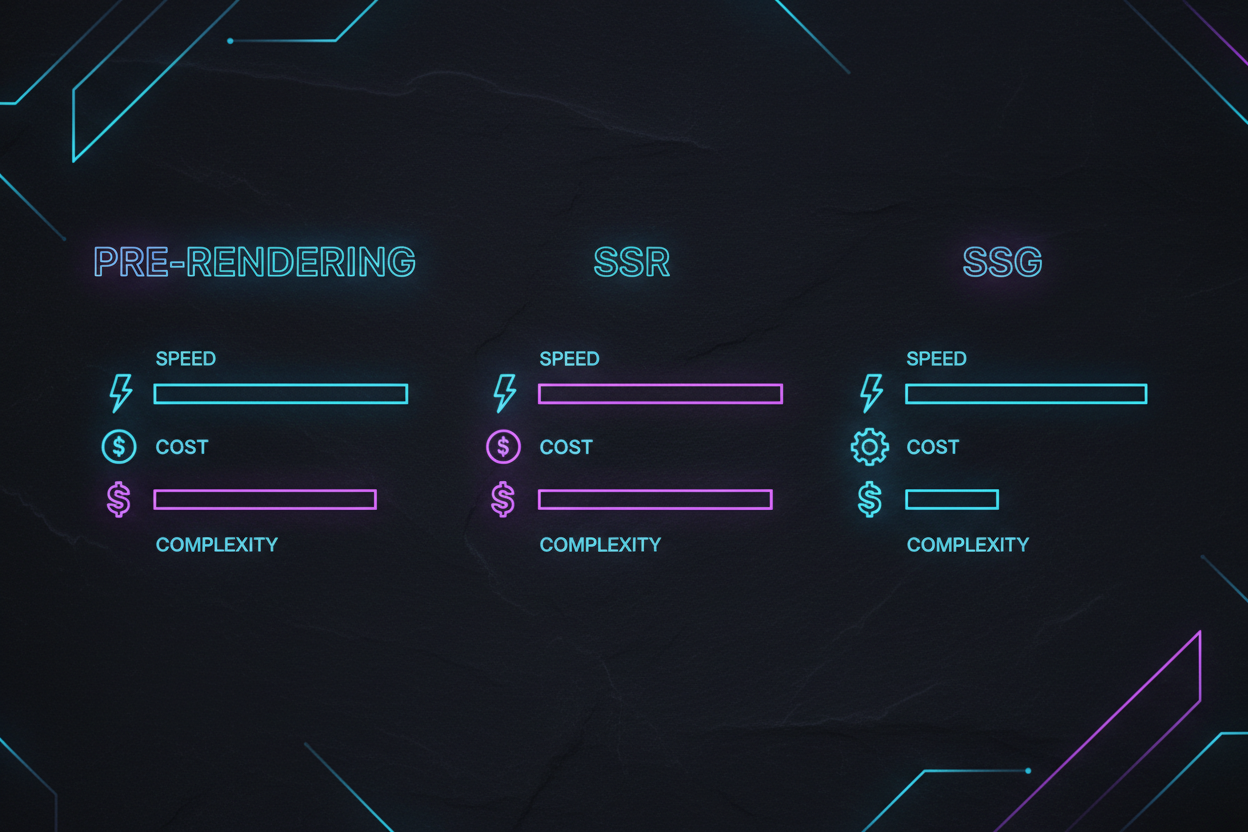
Here's a quick breakdown to help you decide at a glance:
| Criteria              | Pre-Rendering   | SSR             | SSG             |
|-----------------------|-----------------|-----------------|-----------------|
| SEO Effectiveness     | ✅ High          | ✅ High          | ✅ High          |
| Setup Complexity      | 🟢 Low           | 🔴 High          | 🟡 Medium        |
| Hosting Cost          | 🟢 Low           | 🔴 Higher        | 🟢 Very Low      |
| Dynamic Content       | ✅ Supported     | ✅ Supported     | ⚠️ Limited       |
| Works With Existing SPA | ✅ Yes         | ❌ Rebuild needed| ❌ Rebuild needed |
| Time to Implement     | 🟢 Hours        | 🔴 Weeks         | 🟡 Days          |
Hybrid Approaches Are Common
Many production sites mix strategies. A Next.js app might use SSG for marketing pages, SSR for product pages with live inventory, and pre-rendering as a fallback layer for legacy SPA routes. This flexibility is one reason Next.js has become so dominant.
Don't feel locked into a single approach. The goal is ensuring every page your crawler visits gets clean, readable HTML — however you deliver that is secondary.
What About AI Crawlers?
AI-powered search tools like Perplexity, ChatGPT's browsing feature, and Bing's AI index are becoming significant traffic sources. Almost none of them execute JavaScript. If your SPA doesn't serve pre-rendered HTML, you are effectively invisible to this entire category of discovery.
This makes pre-rendering an especially compelling quick win. You solve the AI crawler problem without touching your core codebase or your carefully crafted website design.
The Bottom Line
If you're building something new with SEO as a priority from day one, SSR or SSG are excellent choices — especially with modern frameworks that support both. But if you have a working SPA and need to fix your search visibility without a full architectural overhaul, pre-rendering is by far the fastest path to results.
RndrKit makes pre-rendering dead simple — no server to manage, no code changes required. Just point it at your SPA and let crawlers see what your users already see. It's the pragmatic choice for teams who want better SEO without the rebuild.
Fix your SPA's SEO automatically
RndrKit pre-renders your pages so search engines see fully-rendered HTML.
Start Free Trial