E-E-A-T for Small Businesses: Signals to Build This Week

You don't need a massive marketing budget or a team of SEO consultants to rank well on Google. What you do need is trust — and trust, it turns out, is something small businesses can build faster than they think.
What Is E-E-A-T and Why Should Small Businesses Care?
E-E-A-T stands for Experience, Expertise, Authoritativeness, and Trustworthiness. These are the four quality dimensions Google's Search Quality Raters use to evaluate whether a webpage genuinely serves users well.
Google doesn't use E-E-A-T as a direct ranking factor you can toggle — instead, it's baked into how Google trains and evaluates its systems. Pages that demonstrate high E-E-A-T tend to rank better, especially for queries where getting wrong information has real consequences: health, finance, legal advice, or local services.
For local and small business SEO, E-E-A-T matters enormously. A potential customer searching for a plumber, accountant, or bakery needs to trust you before they ever pick up the phone.
The Difference Between E-A-T and E-E-A-T
Until December 2022, Google's framework was simply E-A-T. The extra "E" — for Experience — was added to recognize that first-hand, lived experience with a topic is itself a credibility signal.
A mechanic who has rebuilt hundreds of engines brings something a purely academic article cannot: real-world context, specific challenges, and authentic results. That's the signal Google is now looking for.
Why Small Businesses Have a Hidden Advantage
Large brands publish polished content, but they rarely show up at a job site, know their customer's dog's name, or document a real project from start to finish. Small business owners do this every single day.
The authentic, specific, personal experience that Google's updated guidelines now reward? You already have it. The challenge is making it visible — on your website, your profiles, and across the web.
Experience Signals You Can Build This Week
Demonstrating experience means showing Google and users that you've done the work — not just that you know about it in theory. Content is your main vehicle here.
Document completed projects with real photos, before-and-after comparisons, and specific timelines.
Share short video walkthroughs of your work process — even a 60-second phone video adds credibility.
Use specific numbers: "We reduced the client's energy bill by 23% in 6 weeks" beats "we save clients money" every time.
Describe challenges you encountered and how you solved them — this signals genuine experience, not marketing copy.
Publish a 'Behind the Work' Story or Case Study
Pick a recent client project and turn it into a 400–600 word blog post. Name the type of client (you can anonymize if needed), describe the challenge they brought to you, explain what you did step by step, and share the measurable result.
Specificity is the magic ingredient. "A 3-bedroom Victorian in north Austin with original 1940s wiring" is far more credible than "an older home." Real details signal that this actually happened.
Expertise Signals You Can Build This Week
Expertise doesn't require a PhD. It requires demonstrating that a real, knowledgeable person stands behind your content and your business. Google wants to attribute expertise to identifiable humans, not faceless company pages.
Create or update an author bio page for every person who writes content on your site.
List relevant certifications, licenses, or trade credentials prominently on your About and Services pages.
Write at least one in-depth how-to post that answers a specific niche question your customers ask repeatedly.
Optimize Your Author and Team Bio Pages
A strong author bio includes: a professional headshot, full name and job title, years of experience in the field, relevant licenses or certifications, and a link to a LinkedIn profile or professional portfolio.
When Google's systems can connect your content to a real person with verifiable credentials, it becomes much easier to attribute expertise — and that attribution improves how your pages are evaluated. While you're auditing your site's content quality, it's worth using a tool like the Page Health Check to catch thin content or blank pages that might undermine your credibility signals.
Authoritativeness Signals You Can Build This Week
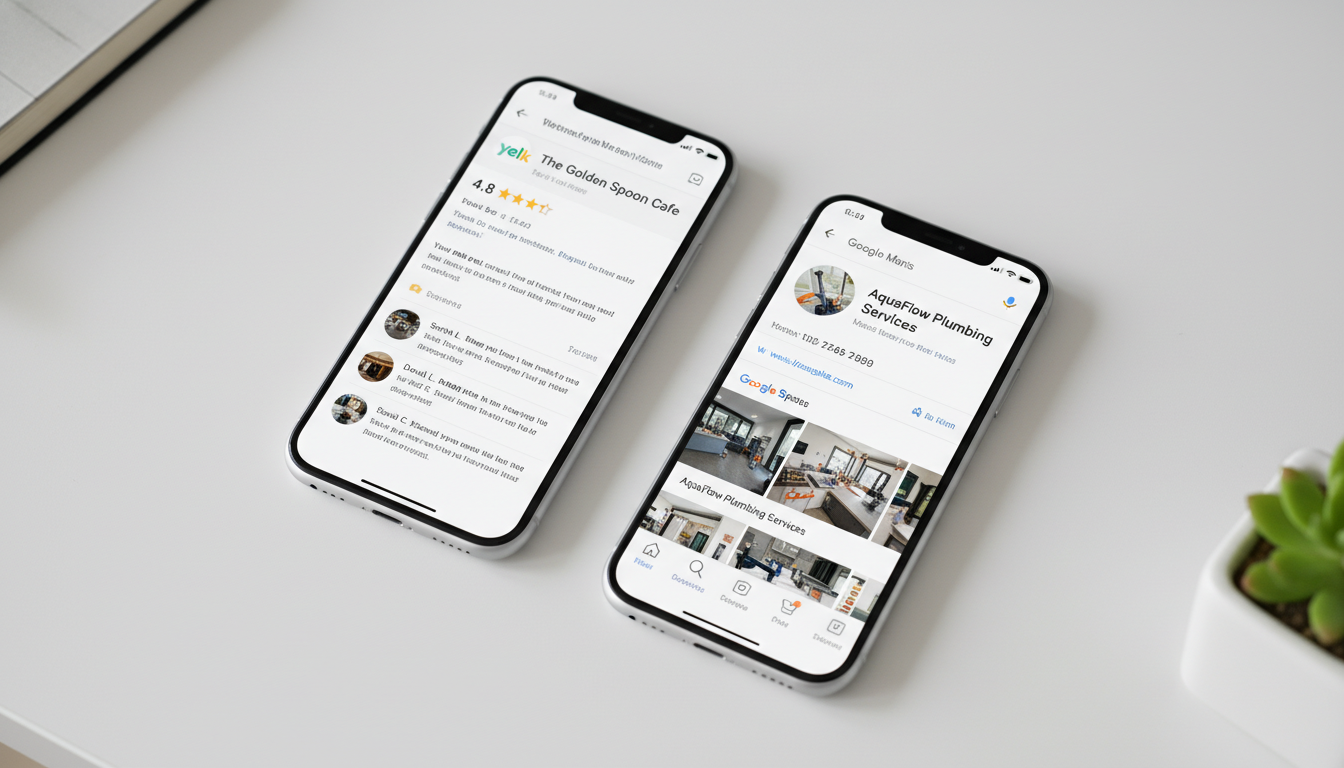
Authority is mostly earned through external validation — other credible sources pointing to or mentioning your business. The good news: for local businesses, the bar is achievable within days.
Claim and Optimize Your Google Business Profile
A fully verified and completed Google Business Profile (GBP) is one of the fastest authority wins available to any local business. If yours isn't claimed yet, that's your first task this week.
Once claimed, fill in every field: business category, service areas, hours, services list, and at least 10 photos of your actual work or premises. For a deeper optimization playbook, the Google Business Profile ranking checklist covers every optimization step you should take in 2025.
Earn Local Citations and Industry Directory Listings
Citations are mentions of your business name, address, and phone number (NAP) across the web. Consistency is critical — even minor variations between listings can dilute your authority signal.
Start with these high-value directories:
Google Business Profile (essential)
Yelp — especially important for restaurants, home services, and retail
Better Business Bureau (BBB) — a recognized trust signal for service businesses
Industry-specific directories: Houzz for contractors, Avvo for legal, Zocdoc for healthcare
Local Chamber of Commerce or city business directory
Trustworthiness Signals You Can Build This Week
Google explicitly states that Trustworthiness is the most important pillar of E-E-A-T. A site can demonstrate experience and expertise, but if users can't verify who you are or feel safe transacting with you, none of it matters.
Ensure your site is served over HTTPS — an unencrypted site is an immediate trust red flag.
Publish a clear Privacy Policy and Terms of Service — link to them in your footer.
Display genuine customer reviews prominently, using full names when customers consent.
Add trust badges for relevant accreditations — licensed, bonded, insured, certified.
Make Contact Information Easy to Find
Hiding your contact details — or burying them on a hard-to-find page — is a trust red flag for both Google and real users. Your phone number, physical address, and a contact form should appear in your site header or footer on every page.
This also matters for your site's technical SEO health. If you're running a JavaScript-based website, make sure your contact information is actually visible to search engine bots — not just rendered in the browser. You can use the Google vs Browser View tool to see exactly what Google sees versus what a user sees on your pages.
Actively Collect and Respond to Customer Reviews
Build a simple weekly habit: after completing a job or delivering a service, send a follow-up message to one or two satisfied customers and ask them to leave a Google review. A short, specific request converts far better than a generic ask.
Crucially, respond to every review — positive and negative. A thoughtful response to a critical review demonstrates accountability and care, two things that signal genuine trustworthiness to both Google and prospective customers.
A Simple Weekly E-E-A-T Checklist for Small Business Owners
Bookmark this and revisit it every week. Consistency compounds — small improvements stack into real authority over months.
Publish or update one piece of content that documents real work (case study, project photo gallery, how-to post).
Ask 1–2 recent customers for a Google or industry-specific review.
Respond to all new reviews — positive and negative — within 48 hours.
Check that your NAP is consistent across all directory listings.
Verify your site has HTTPS, a visible privacy policy, and clear contact details in the header or footer.
Ensure every piece of content is attributed to a named author with a linked bio.
Add or refresh credentials, certifications, or licenses on your About page.
Add at least 2 new photos to your Google Business Profile showing real work.
Identify one new local citation opportunity — a directory, association, or local news mention — and pursue it.
Final Thoughts: Trust Is Built One Signal at a Time
E-E-A-T is not a checklist you complete once and forget. It's an ongoing practice — a commitment to making your genuine expertise, real experience, and authentic customer relationships visible to both Google and the people searching for you.
If you truly serve your customers well, you already have the raw material. The work now is surfacing it: documenting it, publishing it, and distributing it consistently.
And while you're strengthening your content and authority signals, don't let technical gaps undo your hard work. If your website is built on a modern JavaScript framework, search engines may not be reading your content at all. The free SPA SEO Scanner from RndrKit can audit your site across 25+ SEO checks in seconds — so you know your E-E-A-T signals are actually reaching Google, not getting lost in a JavaScript bundle.
Visit: https://rndrkit.io today!
Fix your SPA's SEO automatically
RndrKit pre-renders your pages so search engines see fully-rendered HTML.
Start Free Trial